



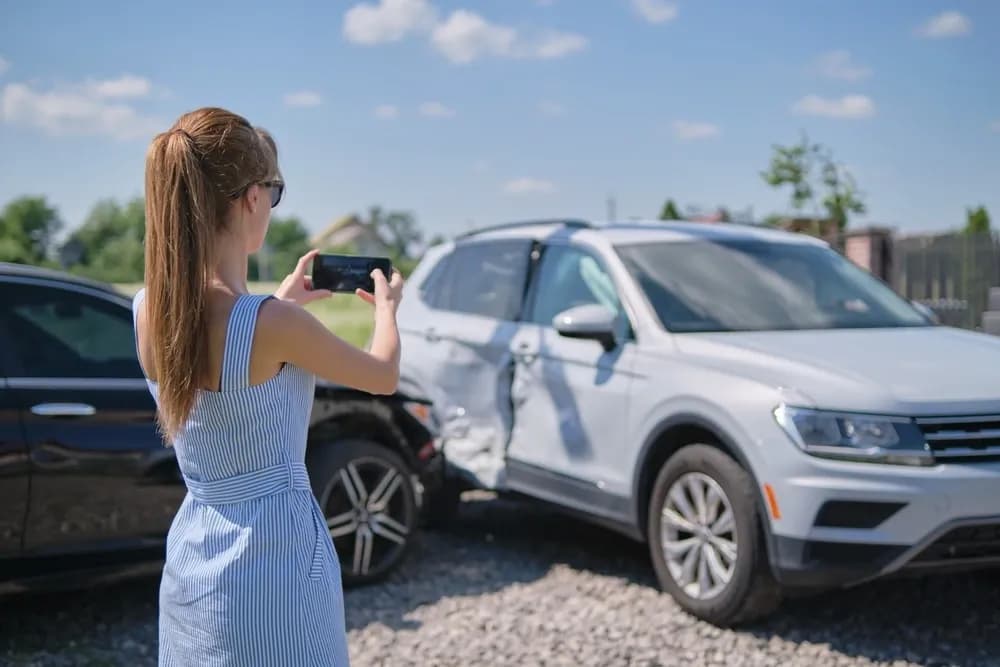
After a car crash in Texas, the evidence you collect can make or break your claim. Insurance companies don't simply take your word for what happened—they demand proof. Without the right documentation, even a clear-cut case can fall apart, leaving you stuck with medical bills and lost wages you can't recover.
Kenny Perez has recovered over $75 million for accident victims throughout Texas by building rock-solid cases backed by compelling evidence. With 300+ five-star reviews from satisfied clients, he knows exactly what documentation wins car accident claims—and what mistakes destroy them.
If you were injured in a Texas car accident, the evidence you gather now determines the compensation you receive later. Kenny Perez Law investigates every crash thoroughly, preserves critical evidence before it disappears, and fights insurance companies with the documentation they can't dispute. Call (956) 544-9292 today for a free consultation—you pay nothing unless we win your case.
Why Evidence Matters in Texas Car Accident Claims

Texas follows an "at-fault" system for car accidents. The driver who caused the crash—or more specifically, their insurance company—must pay for your damages. But insurance adjusters don't hand over money simply because you were hurt. They require evidence proving three critical elements:
Liability: Proof that the other driver was negligent and caused the accident.
Causation: Documentation showing your injuries resulted directly from the crash, not a pre-existing condition.
Damages: Records establishing the full financial impact of your injuries.
Without strong evidence supporting all three elements, insurance companies will reduce your settlement or deny your claim entirely. They have teams of adjusters and lawyers whose job is finding reasons to pay you less. The only counter is overwhelming documentation that leaves no room for dispute.
In the Rio Grande Valley, where uninsured driver rates run high and many crashes involve commercial vehicles crossing from Mexico, solid evidence becomes even more critical. Cases that might seem straightforward—a rear-end collision on Expressway 83, a T-bone crash at a Brownsville intersection—can turn complicated quickly when the at-fault driver disputes what happened or their insurance company claims you're exaggerating your injuries.
Evidence You Need from the Accident Scene
The moments immediately after a crash are critical. Evidence disappears fast—skid marks fade, debris gets cleared, witnesses leave, and your own memory of details begins to blur. If you're physically able, collecting evidence at the scene protects your claim before it even starts.
Police Report
Why it matters: The police report is often the first document insurance companies request. It provides an official record of the crash, including the officer's observations, statements from all drivers, witness information, and sometimes a preliminary determination of fault.
What to do: Always call 911 after any accident involving injuries or significant property damage. Texas law requires reporting accidents that cause injury, death, or property damage exceeding $1,000. When officers arrive, provide a clear, factual account of what happened. Don't speculate or admit fault—stick to what you directly observed.
How to get it: You can request your crash report from the Texas Department of Transportation within a few days of the accident. Kenny Perez Law can obtain this report for you as part of your case investigation.
Photographs and Video
Why it matters: Photos provide visual proof that disputes can't erase. They show vehicle damage, road conditions, traffic controls, weather, and injuries—details that tell the story of how the crash happened and how serious it was.
What to photograph:
- All vehicles involved from multiple angles
- Specific damage to each vehicle (close-up and wide shots)
- The accident scene, including lane positions, traffic signals, and road signs
- Skid marks, debris, and fluid spills
- Road conditions (wet pavement, potholes, construction)
- Weather conditions
- Any visible injuries (cuts, bruising, swelling)
- Property damage (damaged fences, guardrails, etc.)
Pro tip: Take far more photos than you think you need. A comprehensive photo record from the scene can be decisive when the other driver's story contradicts yours.
Driver and Vehicle Information
Collect complete information from all drivers involved:
- Full name, address, and phone number
- Driver's license number and state
- Insurance company name and policy number
- Vehicle make, model, year, color, and license plate
- VIN (vehicle identification number)
Don't trust that the police report will capture everything. Get this information yourself when possible.
Witness Statements
Why they matter: Independent witnesses—people with no stake in the outcome—provide powerful evidence. Their statements can confirm your version of events and counter the other driver's claims.
What to do: Get the names and phone numbers of anyone who saw the crash. Ask if they'd be willing to provide a statement to your attorney. Don't conduct lengthy interviews yourself—your lawyer will handle detailed witness statements later—but secure their contact information before they leave.
Common witnesses: Other drivers, passengers in nearby vehicles, pedestrians, employees at nearby businesses, and residents of nearby homes.
Can't collect evidence at the scene? That's okay. If you're seriously injured, your priority is getting medical attention. Contact Kenny Perez Law immediately—we'll conduct a thorough scene investigation, often returning to the crash site to photograph conditions, interview witnesses, and document details you couldn't capture. Call (956) 544-9292 now.
Medical Documentation: The Foundation of Your Claim
Your medical records do more than document your injuries—they establish causation and quantify your damages. Insurance companies scrutinize medical documentation for any reason to question whether the accident truly caused your injuries or whether you're exaggerating your condition.
Immediate Medical Treatment
Why it matters: Seeking medical attention immediately after the crash creates a clear timeline connecting your injuries to the accident. Gaps between the crash and your first medical visit give insurance companies ammunition to argue your injuries weren't serious or weren't caused by the accident at all.
What to do: Go to the emergency room or urgent care center the same day as the accident, even if you feel "okay." Many serious injuries—whiplash, concussions, internal bleeding—don't show immediate symptoms. Adrenaline masks pain. By the time you realize you're hurt, insurance companies are already building arguments that your injuries came from something else.
Where to go in the Rio Grande Valley: Valley Baptist Medical Center in Brownsville and Harlingen, Valley Regional Medical Center in Brownsville, Doctors Hospital at Renaissance in Edinburg, and McAllen Medical Center all have emergency departments experienced with car accident injuries.
Complete Medical Records
Your claim requires comprehensive documentation of every medical visit related to your accident injuries:
- Emergency room records and ambulance reports
- Hospital admission records
- Diagnostic imaging (X-rays, MRIs, CT scans)
- Doctor's notes from all follow-up appointments
- Physical therapy records
- Prescription records
- Specialist consultations (neurologist, orthopedist, etc.)
- Mental health treatment records (if you're experiencing PTSD, anxiety, or depression after the crash)
Medical Bills and Payment Records
Keep every bill, explanation of benefits (EOB) from your insurance, and payment receipt related to your accident treatment. These records establish the financial impact of your injuries—a critical component of your damages claim.
If you're struggling to pay medical bills while your case is pending, Kenny Perez Law can often arrange for treatment on a lien basis, where providers agree to wait for payment until your case settles. Don't skip necessary treatment because you're worried about cost.
Future Medical Needs
Serious injuries require ongoing care—surgeries, physical therapy, medications, assistive devices, and home modifications. Your claim must account for these future medical expenses, not just the bills you've received so far.
Kenny Perez Law works with medical experts who review your records and provide detailed opinions on your future medical needs and their anticipated costs. This documentation ensures you're not left covering expenses years down the road that should have been included in your settlement.
Documenting Lost Wages and Financial Impact
Car accident injuries force many people to miss work, take reduced hours, or even change careers when they can't return to their previous job. Documenting this financial impact is necessary for recovering full compensation.
Employment and Income Records
- Pay stubs covering the months before and after the accident
- Letter from your employer confirming missed work days
- Tax returns (especially if you're self-employed)
- Documentation of lost benefits (vacation time, bonuses, commissions)
- Medical restrictions limiting your ability to work
Future Earning Capacity
If your injuries prevent you from returning to your previous career or reduce your earning potential, you can recover compensation for future lost wages. This requires expert testimony from vocational rehabilitation specialists and economists who calculate the lifetime financial impact of your injuries.
For example, a 35-year-old construction worker who suffers a back injury that prevents physical labor has potentially lost decades of earning capacity. A teacher who develops cognitive issues after a traumatic brain injury may be unable to continue in their profession. These losses are compensable—but only if properly documented and proven.
Witness Statements and Expert Testimony
Beyond the physical evidence and medical records, personal testimony often determines the outcome of car accident claims.
Lay Witness Statements
Witnesses to the crash provide crucial evidence about how it happened. But witnesses aren't limited to people at the scene. Family members, friends, coworkers, and others who observed how your injuries affected your daily life provide powerful testimony about your pain, limitations, and emotional suffering.
A spouse's statement about how you can no longer play with your children, a coworker's account of how you struggled to return to work, or a friend's testimony about activities you can no longer enjoy—these personal stories put a human face on dry medical records and financial calculations.
Expert Witnesses
Complex car accident cases often require expert testimony to establish liability or prove damages:
Accident reconstruction experts analyze physical evidence, vehicle damage, and crash dynamics to determine how the accident occurred and who was at fault. These experts are particularly valuable in disputed liability cases or multi-vehicle crashes.
Medical experts review your treatment records and provide opinions on the cause of your injuries, your prognosis, and your future medical needs. Their testimony counters insurance company doctors who minimize your injuries.
Economic experts calculate the financial impact of your injuries, including lost earning capacity, future medical costs, and the value of household services you can no longer perform.
Vocational rehabilitation experts assess whether you can return to your previous career and what alternative employment options exist given your limitations.
Kenny Perez Law has relationships with respected experts throughout Texas. When your case requires expert testimony, we bring in the professionals who make your claim undeniable.
Digital Evidence and Surveillance
Modern car accident investigations go beyond traditional evidence. Digital data and surveillance footage often provide the clearest picture of what actually happened.
Traffic Camera and Business Security Footage
Many intersections in Brownsville, McAllen, Harlingen, and Houston have traffic cameras. Nearby businesses—gas stations, restaurants, shopping centers—often have security cameras that captured your crash.
Critical timing issue: Most surveillance footage is automatically deleted after 30-90 days. Identifying and preserving this footage requires immediate action. Kenny Perez Law sends preservation letters to businesses and government entities right away, legally requiring them to save footage before it's erased.
Cell Phone Records
If you suspect the other driver was texting or talking on their phone when they hit you, cell phone records can prove it. Obtaining these records requires legal subpoenas—another reason to hire an attorney quickly.
Texas law prohibits texting while driving and restricts phone use in school zones. Cell phone records showing the at-fault driver was using their phone at the moment of impact provide powerful evidence of negligence.
Vehicle Event Data Recorders (Black Boxes)
Most modern vehicles have event data recorders—"black boxes"—that capture information about the vehicle's operation in the seconds before a crash: speed, braking, steering, seatbelt use, and more. This data can prove the other driver was speeding, failed to brake, or violated traffic laws.
Accessing black box data requires technical expertise and often legal action to prevent the vehicle owner from erasing it. Kenny Perez Law has the resources to download and analyze this data before it's lost.
Social Media
Be careful what you post on social media after an accident. Insurance companies routinely monitor claimants' Facebook, Instagram, and TikTok accounts looking for posts that contradict injury claims. A photo of you smiling at a family gathering doesn't mean you're not in pain—but insurance companies will use it to argue you're exaggerating your injuries.
Social media rules during your claim:
- Don't post about your accident or injuries
- Don't post photos or videos of physical activities
- Don't discuss your case or legal strategy
- Adjust privacy settings to limit who can see your posts
- Assume everything you post will be seen by insurance company lawyers
On the flip side, the at-fault driver's social media can help your case. Posts about drinking, speeding, or reckless driving may establish a pattern of dangerous behavior. Your attorney can investigate the other driver's social media for evidence supporting your claim.
How Insurance Companies Use Evidence Against You

Understanding how insurance adjusters use evidence helps you avoid mistakes that damage your claim.
Recorded Statements
Adjusters often contact accident victims within days of the crash requesting a recorded statement "to process your claim." This is a trap. Adjusters use these statements to lock you into a version of events before you fully understand your injuries or have legal representation. They ask leading questions designed to get you to minimize your injuries or accept partial fault.
Never give a recorded statement to the other driver's insurance company without talking to an attorney first. You have no legal obligation to provide one. Once you say something in a recorded statement, you can't take it back—and insurance companies will use your words against you.
Medical Records Authorization
Insurance companies request authorization to access your medical records, claiming they need to verify your injuries. But the authorization they ask you to sign often gives them access to your entire medical history—records from years before the accident that have nothing to do with your claim.
Adjusters search for any pre-existing condition they can blame your current symptoms on. An old back injury, prior headaches, previous anxiety treatment—anything they can point to and argue your problems existed before the crash.
Never sign a blanket medical authorization. Your attorney can provide limited releases for specific records directly related to your accident injuries.
Gaps in Treatment
If you miss doctor's appointments or go weeks without treatment, insurance companies argue your injuries aren't serious. They claim that if you were really hurt, you would have sought consistent medical care.
Life gets in the way—you can't miss more work, you don't have transportation, you feel a bit better—but gaps in treatment hurt your claim. Follow your doctor's treatment plan consistently. If you're struggling to access care, tell your attorney so we can help.
Inconsistent Statements
Insurance companies compare every statement you make looking for inconsistencies. If you told the police your neck hurt but the ER records don't mention neck pain, adjusters will argue you're exaggerating. If you said the light was green in your first statement but later said you're not sure, they'll claim you're lying.
Be consistent, honest, and thorough in all statements about your accident. If you don't remember something, say so—don't guess. If you didn't mention a symptom immediately because you were focused on more serious injuries, explain that clearly.
Common Evidence Mistakes That Hurt Your Claim
Even well-intentioned accident victims make evidence mistakes that cost them compensation.
Waiting Too Long to Collect Evidence
Memories fade, witnesses move, surveillance footage gets deleted, and physical evidence disappears. The strongest cases are built on evidence collected immediately after the crash. Waiting weeks or months to start your claim makes evidence collection exponentially harder.
Posting on Social Media
That Facebook check-in at your nephew's birthday party gets twisted into "claimant attended party despite claiming severe back injury." The smiling photo of you at a restaurant becomes "claimant enjoying night out, not suffering as claimed." Social media posts—even innocent ones—give insurance companies ammunition.
Skipping Medical Treatment
"I felt better so I didn't go to physical therapy" becomes "claimant's injuries resolved, no need for further treatment." Missing appointments or discontinuing treatment damages your claim even if you're still hurt.
Giving Statements Without Legal Advice
Once you tell the insurance adjuster your version of events, you're locked in. If you later remember additional details or realize your injuries are more serious than you initially thought, the adjuster will use your first statement against you.
Not Preserving Evidence
If you don't keep copies of bills, receipts, and records, you can't prove your damages. If you get your damaged vehicle repaired or totaled out before documenting it thoroughly, you lose valuable evidence. If you don't write down witness names, they're gone.
Accepting the First Settlement Offer
Insurance companies often make quick, low settlement offers before you understand the full extent of your injuries. Once you accept a settlement and sign a release, you can't recover additional money even if your injuries turn out to be far worse than initially diagnosed.
Kenny Perez Law handles all evidence collection, preservation, and documentation for you. You don't have to remember every rule or worry about making a mistake. We've built successful claims for hundreds of Texas car accident victims—we know what evidence wins cases. Call (956) 544-9292 for a free consultation.
When to Hire a Car Accident Attorney
The short answer: immediately. The longer answer: as soon as you realize your accident involves injuries, disputed fault, or substantial damages.
Insurance companies begin building their defense the moment they learn about your accident. They send adjusters to examine vehicles, interview witnesses, and review police reports—all with the goal of minimizing what they'll pay you. If you wait weeks or months to level the playing field by hiring a lawyer, you've already given them advantages that can't be undone.
An attorney preserves evidence that would otherwise disappear, prevents you from making statements that damage your claim, and handles all communication with insurance companies so they can't manipulate you into accepting less than you deserve.
You need an attorney if:
- Your injuries required emergency room treatment or hospitalization
- Your injuries require ongoing medical treatment
- You missed work because of your injuries
- The other driver disputes fault
- Multiple vehicles were involved
- The other driver was uninsured or underinsured
- The accident involved a commercial vehicle or truck
- The insurance company denied your claim or made a lowball offer
- You're not sure what evidence you need or how to collect it
Kenny Perez Law offers free consultations. We review your case, explain what evidence supports your claim, and outline how we can help—with no obligation and no upfront cost. You pay nothing unless we recover compensation for you.
Why Choose Kenny Perez Law for Your Texas Car Accident Claim

$75+ Million Recovered
Kenny Perez has recovered tens of millions of dollars for Texas car accident victims. We know what evidence wins cases because we've built hundreds of successful claims.
300+ Five-Star Google Reviews
We're the most-reviewed personal injury law firm in the Rio Grande Valley. Our clients trust us with their cases—and they're overwhelmingly satisfied with the results.
Local Knowledge and Roots
Kenny Perez was born and raised in Port Isabel, Texas. He knows the Rio Grande Valley roads, the insurance companies operating here, and the challenges Valley families face after accidents. This is his home, not just his practice area.
Immediate Evidence Investigation
We don't wait. The moment you hire us, we begin preserving evidence—sending preservation letters for surveillance footage, photographing accident scenes, interviewing witnesses, and securing the documentation your claim requires.
Bilingual Legal Team
Our entire team speaks Spanish fluently. You communicate in the language you're most comfortable with, and you receive the same level of attention and explanation as any client.
No Fee Unless We Win
You pay nothing upfront and owe us nothing unless we recover compensation for you. Our fee comes from your settlement or verdict—you never pay out of pocket for legal representation.
Personal Attention
When you call our office, you speak with our team—not an answering service. Kenny Perez personally handles every case. You're not a file number; you're a client who deserves dedicated advocacy.
Contact Kenny Perez Law Today
Building a strong car accident claim starts with collecting the right evidence. Don't leave your compensation to chance—work with an attorney who knows exactly what documentation wins cases and how to counter insurance company tactics.
Kenny Perez Law serves car accident victims throughout Brownsville, McAllen, Harlingen, Houston, and all of Texas. We offer free consultations, and you pay nothing unless we recover for you.
Call (956) 544-9292 now or contact us online to schedule your free case review. The evidence you need for your Texas car accident claim starts with one phone call.
Frequently Asked Questions
How long do I have to collect evidence after a Texas car accident?
Evidence collection should begin immediately after your crash. Physical evidence like skid marks and debris disappears within days. Surveillance footage gets deleted in 30-90 days. Witnesses' memories fade quickly. While Texas gives you two years to file a personal injury lawsuit, waiting that long to collect evidence leaves you with a much weaker case. Contact an attorney within days of your accident to ensure critical evidence is preserved.
Can I still file a claim if I didn't take photos at the accident scene?
Yes. While scene photos are valuable, they're not the only evidence supporting your claim. Police reports, medical records, witness statements, and surveillance footage can all establish what happened and how seriously you were injured. An attorney can often return to the accident scene to photograph road conditions, sight lines, and traffic controls that remain relevant weeks or months later. Don't assume your claim is lost just because you didn't photograph everything immediately.
What if the other driver is lying about how the accident happened?
This is exactly why evidence matters. When liability is disputed, your attorney investigates to find objective evidence that proves what really happened—surveillance footage, event data recorder information, witness statements, and accident reconstruction analysis. Insurance companies and juries trust independent evidence far more than competing driver statements. Kenny Perez Law handles dozens of disputed liability cases every year. We know how to find the proof that exposes false claims.
Do I need to keep my damaged car as evidence?
Not indefinitely, but photograph it thoroughly from all angles before repairs or disposal. Document specific damage points that show impact location and severity. If your case involves complex accident reconstruction, your attorney may want an expert to examine the vehicle before it's repaired. Contact a lawyer before having your car fixed or accepting an insurance company's total loss payment to ensure you've preserved necessary evidence.
Will insurance companies really check my social media?
Absolutely. Insurance defense lawyers routinely search for claimants' social media profiles and monitor them throughout the claims process. They look for photos or posts that could be twisted to suggest you're not as injured as you claim. Even innocent posts—a family photo where you're smiling, a check-in at a restaurant—get used against you. The safest approach is posting nothing about your accident, injuries, or activities during your claim.
What if I can't afford to pay for medical treatment right now?
Don't skip medical care because of cost concerns. Many doctors in the Rio Grande Valley work with car accident victims on a lien basis, providing treatment and waiting for payment until your case settles. Kenny Perez Law can help arrange treatment so you get the care you need without upfront payment. Gaps in treatment hurt your claim far more than medical bills that are paid later.
How much does it cost to hire Kenny Perez Law for a car accident case?
Nothing upfront. We work on contingency, meaning you pay no legal fees unless we recover compensation for you. Our fee is a percentage of your settlement or verdict—you never pay out of pocket for attorney services. Initial consultations are always free. We believe injured Texans shouldn't have to pay to get the legal help they need.
What if the other driver didn't have insurance?
You may still recover compensation through your own uninsured motorist (UM) coverage if you carry it. Texas doesn't require UM coverage, but many policies include it. If the at-fault driver has no insurance and you don't have UM coverage, you may be able to sue the driver personally, though collecting can be difficult. Kenny Perez Law evaluates all potential sources of recovery and pursues every option available to compensate you for your injuries.
Can I get compensation for pain and suffering, or just medical bills?
You can recover both economic damages (medical bills, lost wages, property damage) and non-economic damages (pain and suffering, mental anguish, reduced quality of life). In fact, pain and suffering damages often exceed economic damages in serious injury cases. The key is documenting how your injuries affected your daily life—your ability to work, care for your family, enjoy hobbies, and function normally.
What if I was partially at fault for the accident?
Texas follows modified comparative fault—you can still recover compensation as long as you were 50% or less at fault. Your compensation is reduced by your percentage of fault. For example, if you're found 20% at fault and your damages total $100,000, you'd recover $80,000. Evidence becomes especially critical in comparative fault cases. Strong documentation showing the other driver's negligence was the primary cause protects your right to compensation.
How long will it take to settle my car accident claim?
It depends on the complexity of your case and the extent of your injuries. Simple cases with clear liability and minor injuries may settle in a few months. Serious injury cases requiring extensive medical treatment, expert testimony, and negotiation with stubborn insurance companies can take a year or more. The important thing is not rushing settlement before you understand the full extent of your injuries. Accepting a quick settlement often means leaving money on the table when your injuries turn out to be worse than initially diagnosed.